

The Mental Load of Weddings (and Other Life Transitions)

Weddings are often framed as joyful, exciting, once-in-a-lifetime events. And they are. But they are also emotionally complex, psychologically demanding, and—far more often than we name—mentally exhausting.

At AisleTalk, wedding stress is one of our favorite topics. Not because we enjoy seeing people struggle, but because wedding stress is rarely just about the wedding. It’s usually about something deeper: identity shifts, invisible labor, and the weight of expectations that arrive quietly during major life transitions.

taylor brandon rNnoXb3Zq7g unsplash

Life Transitions and Identity Shifts

Major milestones like getting married, merging families, or becoming a parent don’t just change logistics. They introduce you to a new version of yourself.

You may expect certain practical adjustments: changing a last name, combining finances, navigating holidays differently, or coordinating schedules. What’s less expected is how these changes alter your internal point of view. The same situation can suddenly feel heavier, more personal, or more emotionally charged—not because something is wrong, but because your role has changed.

This is what we mean by an identity shift. You move from partner to spouse, from individual to family, from adult to caregiver. And with each shift comes new responsibilities; many of them unspoken.

The Mental Load We Don’t Talk About

The mental load refers to the invisible, ongoing cognitive and emotional labor involved in managing life. It includes anticipating needs, remembering details, coordinating logistics, smoothing relationships, and ensuring that everyone else’s experience goes well.

During weddings, this often looks like:

  • Tracking guest expectations
  • Balancing family dynamics and traditions
  • Managing vendors, timelines, and decisions
  • Holding boundaries while trying not to disappoint anyone
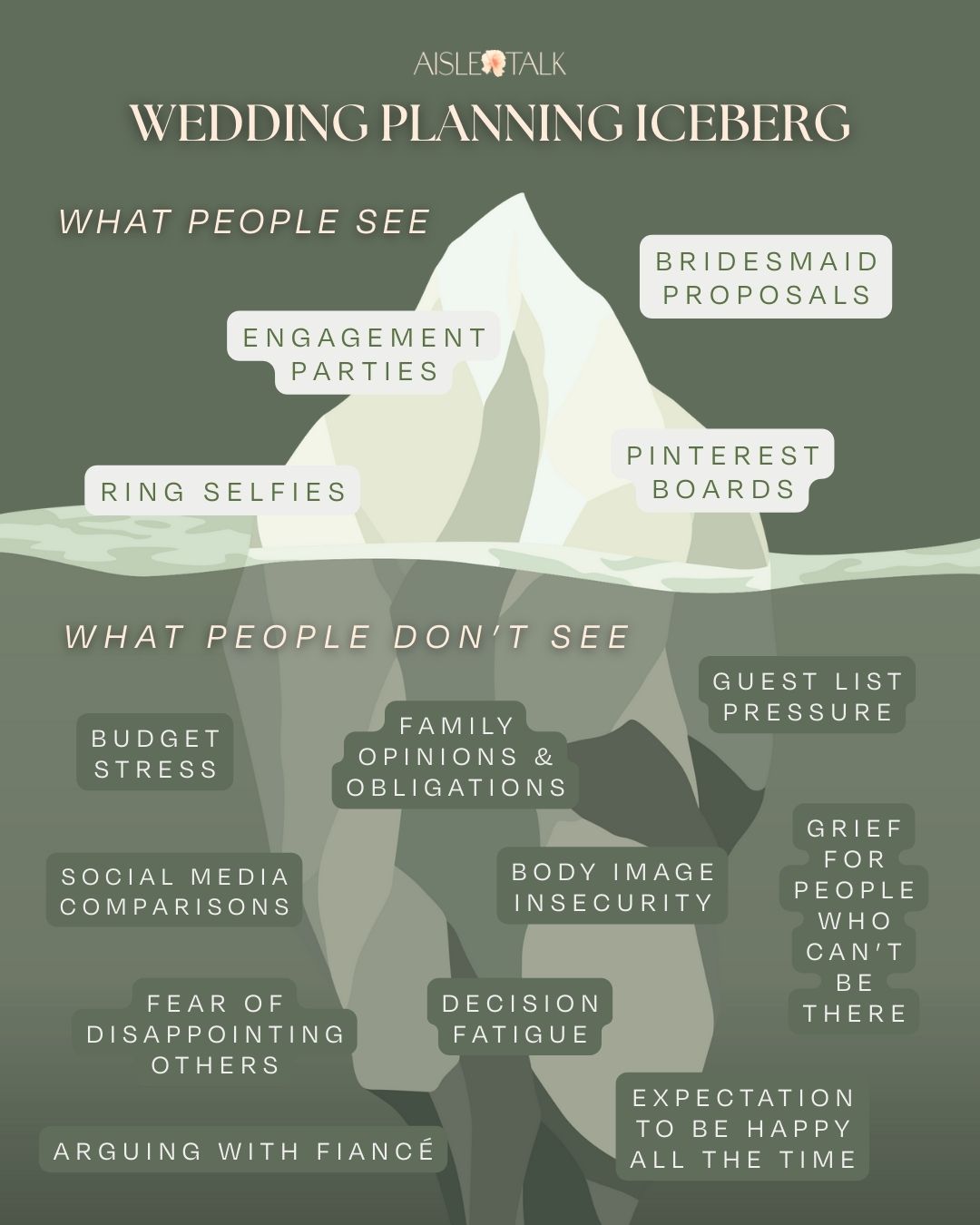
Wedding Planning Iceberg

This labor is rarely evenly distributed, and it’s rarely acknowledged.

Why the “Bridezilla” Narrative Misses the Point

When the mental load becomes too heavy, stress shows up. Sometimes it looks like irritability, overwhelm, tears, or strong reactions to seemingly small things. This is often when the term bridezilla gets introduced.

At AisleTalk, we strongly push back against this label.

The so-called bridezilla is often someone who is:

  • Carrying the responsibility for everyone else’s comfort
  • Navigating conflicting expectations with no clear roadmap
  • Trying to honor family history while building a new family system
  • Managing an event where pleasing everyone is literally impossible

Women are socialized to be accommodating, agreeable, and emotionally attuned to others. Then they are placed at the center of a high-stakes event and criticized when the strain becomes visible. The label doesn’t solve the problem; it silences it.

How This Shows Up Beyond Weddings

Weddings are not the only place this dynamic appears.

We see the same pattern during holidays, during the transition to parenthood, and at other major life milestones. The overwhelmed holiday parent, the exhausted caregiver, the partner quietly holding everything together—these are all expressions of the same underlying issue.

Eventually, the impossible math becomes undeniable:

  • One person cannot hold all of this
  • Much of the labor is unseen
  • The expectations are unsustainable

When something breaks down, the reaction is often met with judgement rather than empathy.

What Actually Helps

Reducing the mental load isn’t about “calming down” or “being more flexible.” It’s about redistributing responsibility and making the invisible visible.

priscilla du preez MIf25phxNlE unsplash 1

Helpful steps often include:

  • Naming what you’re carrying
  • Sharing decision-making and planning tasks
  • Setting boundaries, even when they feel uncomfortable
  • Letting go of the idea that everyone must be happy
  • Getting support during transitions rather than waiting until burnout

These are not easy changes—but they are necessary ones.

You’re Not Doing It Wrong

If your wedding, your holidays, or another major transition feels heavier than you expected, it doesn’t mean you’re failing or overreacting. It often means you’re carrying more than your share.

At AisleTalk, we specialize in supporting people through the emotional realities of life’s happiest moments. Because joy and stress are not mutually exclusive—and you deserve support for both.

Book an intro call with one of our incredible team members today. We can explore together how we can support your stress and your joy.

Feeling Stressed About Wedding Planning?

You're not alone—and you don’t have to go through it alone either. Whether you're newly engaged, navigating family dynamics, or feeling overwhelmed by decisions, our licensed therapists are here to help you feel grounded, confident, and connected throughout your journey.

Let’s talk

The Mental Load of Weddings (and Other Life Transitions)

Weddings are often framed as joyful, exciting, once-in-a-lifetime events. And they are. But they are also emotionally complex, psychologically demanding, and—far more often than we name—mentally exhausting.

At AisleTalk, wedding stress is one of our favorite topics. Not because we enjoy seeing people struggle, but because wedding stress is rarely just about the wedding. It’s usually about something deeper: identity shifts, invisible labor, and the weight of expectations that arrive quietly during major life transitions.

taylor brandon rNnoXb3Zq7g unsplash

Life Transitions and Identity Shifts

Major milestones like getting married, merging families, or becoming a parent don’t just change logistics. They introduce you to a new version of yourself.

You may expect certain practical adjustments: changing a last name, combining finances, navigating holidays differently, or coordinating schedules. What’s less expected is how these changes alter your internal point of view. The same situation can suddenly feel heavier, more personal, or more emotionally charged—not because something is wrong, but because your role has changed.

This is what we mean by an identity shift. You move from partner to spouse, from individual to family, from adult to caregiver. And with each shift comes new responsibilities; many of them unspoken.

The Mental Load We Don’t Talk About

The mental load refers to the invisible, ongoing cognitive and emotional labor involved in managing life. It includes anticipating needs, remembering details, coordinating logistics, smoothing relationships, and ensuring that everyone else’s experience goes well.

During weddings, this often looks like:

  • Tracking guest expectations
  • Balancing family dynamics and traditions
  • Managing vendors, timelines, and decisions
  • Holding boundaries while trying not to disappoint anyone
Wedding Planning Iceberg

This labor is rarely evenly distributed, and it’s rarely acknowledged.

Why the “Bridezilla” Narrative Misses the Point

When the mental load becomes too heavy, stress shows up. Sometimes it looks like irritability, overwhelm, tears, or strong reactions to seemingly small things. This is often when the term bridezilla gets introduced.

At AisleTalk, we strongly push back against this label.

The so-called bridezilla is often someone who is:

  • Carrying the responsibility for everyone else’s comfort
  • Navigating conflicting expectations with no clear roadmap
  • Trying to honor family history while building a new family system
  • Managing an event where pleasing everyone is literally impossible

Women are socialized to be accommodating, agreeable, and emotionally attuned to others. Then they are placed at the center of a high-stakes event and criticized when the strain becomes visible. The label doesn’t solve the problem; it silences it.

How This Shows Up Beyond Weddings

Weddings are not the only place this dynamic appears.

We see the same pattern during holidays, during the transition to parenthood, and at other major life milestones. The overwhelmed holiday parent, the exhausted caregiver, the partner quietly holding everything together—these are all expressions of the same underlying issue.

Eventually, the impossible math becomes undeniable:

  • One person cannot hold all of this
  • Much of the labor is unseen
  • The expectations are unsustainable

When something breaks down, the reaction is often met with judgement rather than empathy.

What Actually Helps

Reducing the mental load isn’t about “calming down” or “being more flexible.” It’s about redistributing responsibility and making the invisible visible.

priscilla du preez MIf25phxNlE unsplash 1

Helpful steps often include:

  • Naming what you’re carrying
  • Sharing decision-making and planning tasks
  • Setting boundaries, even when they feel uncomfortable
  • Letting go of the idea that everyone must be happy
  • Getting support during transitions rather than waiting until burnout

These are not easy changes—but they are necessary ones.

You’re Not Doing It Wrong

If your wedding, your holidays, or another major transition feels heavier than you expected, it doesn’t mean you’re failing or overreacting. It often means you’re carrying more than your share.

At AisleTalk, we specialize in supporting people through the emotional realities of life’s happiest moments. Because joy and stress are not mutually exclusive—and you deserve support for both.

Book an intro call with one of our incredible team members today. We can explore together how we can support your stress and your joy.

Published on